
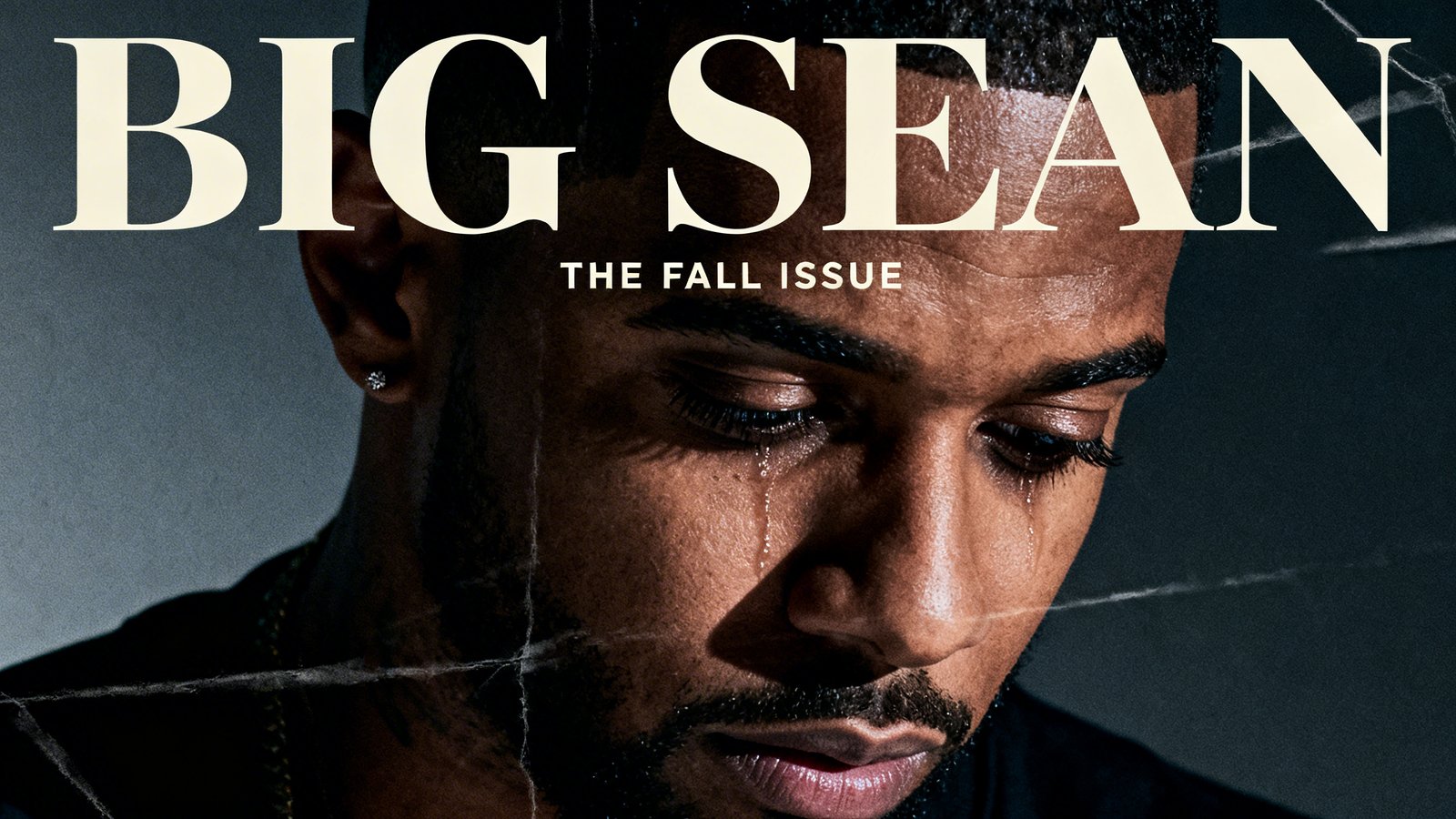
You know, sometimes you see two people in an industry, you think you know their vibe, their connection. You see Big Sean – Detroit native, smooth flow, pretty successful, right? And Nipsey Hussle – Crenshaw legend, community builder, marathon runner. Different lanes, maybe? That’s what I thought, too, to be honest. But then you hear Big Sean talk about Nipsey, and it hits you like a truck. This wasn’t just a professional acquaintance. This wasn’t just a “respect” thing. This was deep. Really, really deep.
The Brotherhood Nobody Saw Coming
I mean, we see rappers collaborate all the time. It’s part of the game. You lay down a track, you do a video, you shout each other out on social media. It’s all part of the branding, the networking, the whole shebang. But what Big Sean shared, especially a year or so after Nipsey’s horrific murder, was something else entirely. It was raw. It was painful. It was the kind of grief that makes you just… stop.
Sean told PEOPLE back in 2020, and I remember reading it, how Nipsey “was more like my brother.” Let that sink in for a second. Not a friend. Not a peer. A brother. And look, I’ve been around this block more than a few times. I’ve heard plenty of artists talk about their “brothers” in the game. Most of the time, it’s hyperbole, a way to amp up the camaraderie. But with Sean, you could feel it. The weight of that statement. The truth in it.
And it wasn’t just a throwaway line. He admitted that losing Nipsey, among other things, just absolutely crushed him. He hit a wall. A serious, concrete, no-way-around-it wall. He went into a deep, dark depression. For a guy who always seemed to have that confident swagger, that ready smile, that was a huge admission. A vulnerable one. It tells you everything you need to know about the impact Nipsey had, not just on the world, but on the people closest to him. The quiet ones, too, who maybe didn’t always broadcast their connections.
The Kind of Loss That Breaks You
What’s interesting here is that Nipsey Hussle wasn’t just a rapper. He was an idea. He was a movement. He was a blueprint for ownership, for community investment, for believing in yourself and your neighborhood, even when everyone else counted you out. He was that guy who made you think, “Okay, maybe there is another way.” And for someone like Big Sean, who’s also navigated the music industry for years, probably seen all the fakeness and the cutthroat nature of it – to find someone like Nipsey, who was genuinely about that life, that’s priceless. That’s a rare gem. And then to have that gem ripped away… brutally, senselessly…
I mean, think about it. We often put these public figures on pedestals, right? We see their success, their fame, their money. We don’t always think about the very human connections they forge, the friendships, the brotherhoods that sustain them when the cameras are off and the beats aren’t dropping. We don’t think about the raw, visceral pain of losing someone who actually gets you, who inspires you, who pushes you to be better. Nipsey was that for so many people, and clearly, for Big Sean, too. This wasn’t just a loss for hip-hop. It was a personal gut-punch.
When the Mic Goes Quiet: What Happens When Grief Takes Over?
It’s easy to look at successful artists and assume they’re immune to the everyday struggles of mental health. They have money, they have fame, they have “it all,” right? But that’s such a naive, frankly stupid, way to look at things. Grief doesn’t care about your bank account or your Billboard charting position. Depression doesn’t give a damn about your platinum plaques. It just hits you. And from what Big Sean described, it hit him hard. He wasn’t just sad; he was in a “very deep depression.”
“Hussle was more like my brother.”
That quote, man. It just hangs there. You hear it, and you don’t just hear words. You hear the echo of a bond, and then the deafening silence that follows its abrupt end. For Sean, this wasn’t just losing a collaborator or a friend. It was losing a piece of his foundation. A pillar. And when a pillar crumbles, the whole structure shakes. He spoke about needing to step back, to really deal with it, to get help. And that, if I’m being honest, is incredibly brave. Especially in a culture where showing that kind of vulnerability can sometimes be seen as a weakness. It’s not. It’s strength. Real strength.
The Echoes of a Tragedy
This whole situation-Nipsey’s death, Sean’s subsequent depression-it just highlights something we often ignore: the immense pressure on these artists. They’re expected to be strong, to be invincible, to entertain us no matter what’s going on in their personal lives. But they’re just people. And when someone they consider a brother is murdered in cold blood, yeah, that’s gonna mess you up. It’s gonna make you question everything. It’s gonna throw you into a spiral. It’s not just a sad news story; it’s a traumatic event that ripples through countless lives.
We’ve seen this pattern before, unfortunately. Artists dealing with public grief, private battles. But Sean’s candor, his willingness to say “I wasn’t okay,” that’s important. It normalizes the struggle. It tells anyone out there, fan or not, that it’s okay not to be okay. That even the biggest stars need help sometimes. And it underscores the profound impact one person can have on another, even when the public perception might be that they’re in different orbits. Sometimes the most significant connections are the ones that fly under the radar until tragedy strikes.
What This Actually Means
So what does this all mean for us, the people on the outside looking in? It’s simple, really. It means empathy. It means remembering that behind every headline, every album drop, every social media post, there’s a human being. A human being with real feelings, real relationships, and real pain. When we talk about mental health, especially in communities that sometimes struggle to openly discuss it, stories like Big Sean’s are vital. They break down barriers. They show that grief is universal, and its impact can be devastating, even for someone who seems to have everything.
It’s not about pity. It’s about understanding. It’s about recognizing that the loss of someone like Nipsey Hussle wasn’t just a moment in time, a news cycle that came and went. For those who loved him, like Big Sean, it was a seismic event that rearranged their entire emotional landscape. And sometimes, you just gotta let the raw, messy truth of that pain sit with you. It’s a powerful reminder that while the music might be larger than life, the people who make it are just as fragile, and just as human, as the rest of us. And sometimes, their grief is just as real, and just as shattering, as our own.