
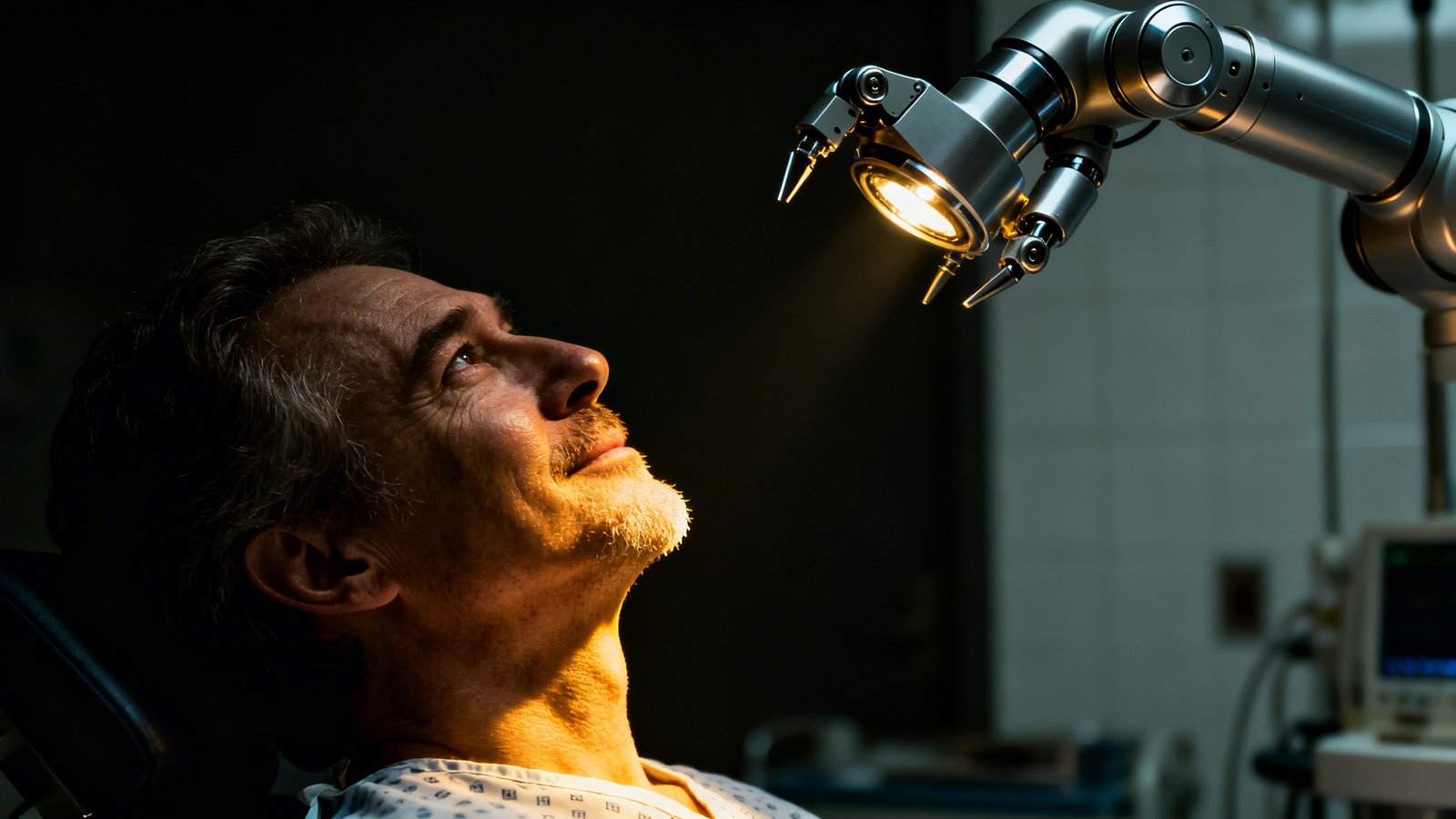
Robot Saved My Dad: Meet Hugo!
Okay, so I read this story, and I gotta be honest, my first thought was something like, “Wait, a robot did surgery? On a dad?” And then I read it again, and man, it actually gets even wilder. We’re talking about James Choate-Deeds, right? A guy diagnosed with prostate cancer, and instead of the usual cut-you-open-like-a-Thanksgiving-turkey routine, he opts for a clinical trial. For robotic-assisted surgery. With a machine named Hugo. I mean, “Hugo”? It sounds like a character from a kid’s show, not a surgeon. But here we are.
Seriously, A Robot Named Hugo?
Look, I’ve been covering medical stuff for years, and the tech always blows my mind. But a robot with a name? That’s new. And kind of awesome, if I’m being frank. James’s story isn’t just a feel-good piece, it’s a peek into what’s not just “coming” but what’s here. He found out he had prostate cancer, and that’s just a gut punch, full stop. Nobody wants that call. But instead of just going with the standard procedure, he decides to jump into this clinical trial. That takes guts, doesn’t it? Putting your trust, your actual life, in the hands – or rather, the incredibly precise, multi-jointed arms – of a machine.
The thing is, we’ve all seen the sci-fi movies where robots take over, usually for evil, or at least for comedic incompetence. But this Hugo, this robotic system, it’s not trying to conquer the world. It’s trying to save lives. And from what I can tell, it did a damn good job for James. We’re talking about tiny incisions, less blood loss, faster recovery times. This isn’t just a marginal improvement; this is big. Really big. It’s the kind of thing that makes you think, “Okay, maybe those robot overlords aren’t so bad if they can fix us up like this.”
Precision Over Power
What’s interesting here is that it’s not about the robot being “stronger” or “faster” than a human surgeon. It’s about precision. Those robotic arms can get into places and make movements that human hands just can’t. Think about it – a surgeon, no matter how good, has a limit to how steady their hand can be, how small they can make an incision. Hugo, or any of these robotic systems, they don’t get tired. They don’t shake. They can operate in super tight spaces with incredible accuracy. And for something as delicate as prostate surgery, where preserving nerves and functions is absolutely critical, that kind of precision? It’s a game changer. It means guys like James can get back to their lives faster, with fewer long-term side effects. That’s huge.
But Seriously, No Human Touch?
Okay, so the robot does the cutting, the stitching, all the delicate stuff. But let’s be clear, this isn’t some rogue AI just doing whatever it wants. There’s a human surgeon at the controls, guiding Hugo every step of the way. It’s like a really advanced, super precise remote-control game, but with much higher stakes than just winning a race. The surgeon is still the brain, the one making the decisions, interpreting the scans, planning the attack. The robot is the ultimate tool, an extension of the surgeon’s skill, not a replacement.
“You’re kinda lying there, thinking, ‘A robot’s got its hands inside me right now.’ It’s weird, but then you wake up and you’re feeling better than you expected, and you just think, ‘Who cares what did it?'”
The Robot Revolution in Medicine
This isn’t just about prostate cancer, is it? This is about what’s coming next for pretty much every type of surgery. We’ve already seen robotic assistance in knee replacements, heart surgeries, you name it. But the idea that a robot could perform such intricate, life-altering surgery for something like cancer, and do it with better outcomes? That’s the real headline. It challenges our old ideas about what medicine looks like. For generations, it’s been the brilliant surgeon with their trusty scalpel. Now, it’s the brilliant surgeon with their trusty… well, robotic system with a friendly name.
And you know, there’s always that initial fear, right? “Is it safe? What if it malfunctions?” Those are totally valid questions. But clinical trials like the one James was in are all about proving safety and effectiveness. And if the results are like James’s – successfully treated, quick recovery, minimal complications – then it’s hard to argue against it. The thing is, humans make mistakes. Robots, when programmed and operated correctly, don’t. That’s a pretty compelling argument when your life’s on the line.
What This Actually Means
Here’s my honest take: This isn’t just a cool story about a guy and his robot surgeon. This is a glimpse into the future of healthcare, and it’s probably going to save a lot of lives. It means less invasive procedures, which translates to less pain, fewer infections, and people getting back to their families and jobs faster. It means surgeons can perform even more complex operations with a level of precision that was just impossible a few years ago.
Now, it won’t be cheap, at least not at first. And not every hospital will have a “Hugo” sitting around. But the technology trickles down. It always does. So, yeah, when I first read “Robot Saved My Dad,” I was skeptical. But after digging in, I’m actually pretty excited. It means more Dads get saved. More people get a second chance. And if it takes a friendly named robot to do it, then I say, bring on the Hugos. Just don’t let them start asking for coffee breaks… or unionizing. That’s probably a whole other story.