





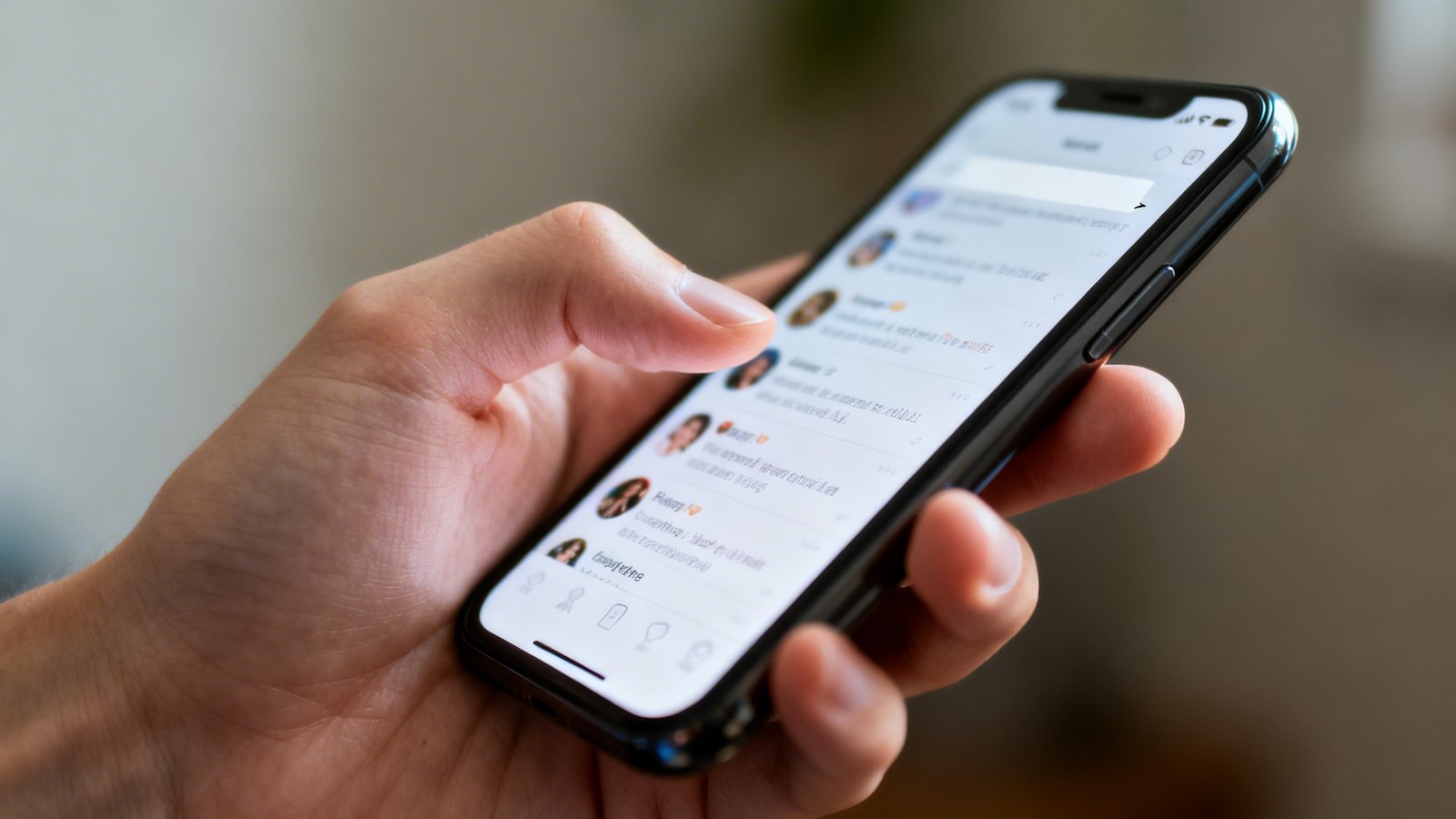
Okay, so listen up, because the EU-those folks in Brussels who seem to spend their days dreaming up new ways to make Big Tech sweat-might actually be doing something genuinely good for your brain. Like, for real. They’re talking about killing infinite scrolling. Yeah, you heard me. That endless, hypnotic feed on TikTok, Instagram, Facebook, X (or Twitter, whatever you wanna call it today)… gone. Or at least, heavily regulated. Took ’em long enough, right?
“Scroll Shock” is Right, But Maybe It’s a Good Shock?
I mean, think about it for a second. How many times have you picked up your phone, just to “check something quickly,” and then suddenly, an hour and a half has evaporated into the digital ether? You’re not alone. We’ve all been there. Staring at some random person’s vacation photos, or a cat video, or a rant about politics you don’t even care about, and you just keep going. Down, down, down the rabbit hole. It’s a design feature, not a bug, folks. And it’s designed to keep your eyeballs glued to the screen, serving up more ads, more engagement, more of whatever these companies want to sell you.
The EU, bless their bureaucratic hearts, is finally calling BS on this. Politico.eu broke the story-and yeah, I read it, probably while procrastinating on something else, ironically-that the European Parliament is pushing for new rules. Not just about targeted ads (though that’s part of it, obviously, because money), but specifically about how platforms keep us hooked. They’re looking at things like the “like” button, notifications, and, yep, infinite scrolling. The Digital Services Act (DSA) is already in play, and this is like the next logical step, or maybe a much-needed aggressive interpretation of it.
And you know what? It’s about damn time. I’m not gonna lie, I’ve got a love-hate relationship with my phone. Mostly hate when I realize how much time I’ve wasted just… scrolling. It’s like a digital pacifier that never runs out. It numbs your brain, it makes you compare your life to everyone else’s highlight reel, and it just generally saps your will to do anything productive. Who cares if you’re getting “personalized content” if that content is basically just keeping you in a state of semi-conscious stupor? Not me, that’s for sure.
The Real Addiction
We talk about phone addiction, right? Like it’s some vague personal failing. But the thing is, these platforms are engineered, with incredible precision, by some of the smartest people in the world, to be addictive. They’re literally using behavioral psychology against us. Infinite scroll is a prime example. There’s no natural stopping point. No bottom. It’s like an endless buffet where you never feel full, but you just keep eating because it’s right there, constantly refreshed. It creates a dopamine loop that’s incredibly hard to break. And that’s not just “bad habits,” that’s manipulation.
So, Will It Actually Work? That’s the Million-Dollar Question, Isn’t It?
This isn’t the first time the EU has gone after Big Tech, is it? Remember GDPR? Everyone freaked out, thought the internet was gonna break. It didn’t. It just meant companies had to, you know, actually ask for your consent instead of just taking your data willy-nilly. And then there’s the DMA-the Digital Markets Act-which is trying to rein in the gatekeepers, make them play fair. Apple’s already grumbling about having to open up its App Store, which, again, good. Competition is good. Choice is good. Not being held hostage by a single ecosystem? Also good.
“We’re not talking about banning social media. We’re talking about making it less exploitative, less harmful. It’s about giving people back a little bit of control over their own attention spans, which, let’s be honest, Big Tech has been systematically stealing for years.”
But back to the scroll. What would it even look like? A “load more” button? A hard stop after, like, 10 posts? A timer? Honestly, I don’t know the exact mechanism, and I’m sure the lawyers at Meta and TikTok are already working overtime to figure out how to circumvent whatever the EU comes up with. Because that’s what they do. They innovate around regulation. They’ll find a loophole, or a “dark pattern” as they call ’em, that technically complies but still keeps you hooked. It’s a cat-and-mouse game, and frankly, the mouse usually wins. But hey, at least the cat’s trying, right?
The Meat of It: Analysis, Implications, and What Everyone’s Missing
The real implication here isn’t just about infinite scrolling itself, it’s about the broader shift in how regulators are viewing these platforms. They’re moving beyond just data privacy and antitrust. They’re starting to really look at the design of these apps and how that design impacts our mental health, our productivity, and frankly, our ability to just exist without being constantly bombarded. It’s a recognition that the digital world isn’t some neutral space; it’s a carefully constructed environment with specific goals, and those goals aren’t always aligned with our well-being.
And you know what else? This could be huge for kids. Seriously. We’ve all seen the studies, the warnings about screen time, the anxieties, the depression linked to constant social media use. If you put a real break in the scroll, maybe-just maybe-it gives young people a chance to actually look up. To disengage. To remember there’s a world beyond their phone screen. It’s not a magic bullet, obviously. But it’s a step. A pretty big, important step, if you ask me.
The US, of course, is probably watching all this from afar, scratching its head, and wondering if they should maybe, eventually, get around to doing something similar. But let’s be real, our regulatory bodies move at the speed of molasses on a cold day when it comes to tech. So, once again, it’ll probably be the EU paving the way, taking the slings and arrows from Silicon Valley, and then maybe, just maybe, the rest of the world will follow suit after they see it doesn’t actually destroy the internet as we know it.
What This Actually Means
Look, if this goes through, it’s not going to suddenly make everyone throw their phones in the ocean and go live in a yurt. That’s not how it works. But what it could do is introduce a tiny bit of friction. A moment to pause. A chance for your brain to catch up and say, “Hey, maybe I’ve seen enough cat videos for one day.” It’s about intentionality. It’s about giving us a little bit of our agency back, which these platforms have been systematically eroding for years.
Will Big Tech fight it? Oh, absolutely. They’ll argue it stifles innovation, that it’s bad for users (because apparently, being endlessly addicted is “good” for us), that it’s censorship. Blah, blah, blah. We’ve heard it all before. But if the EU holds firm-and they usually do when they put their mind to something like this-then we might just see a slightly less addictive, slightly more human-friendly internet emerge from the other side. And honestly? That’s a future I’d be pretty excited to scroll… or, you know, not scroll, into.

