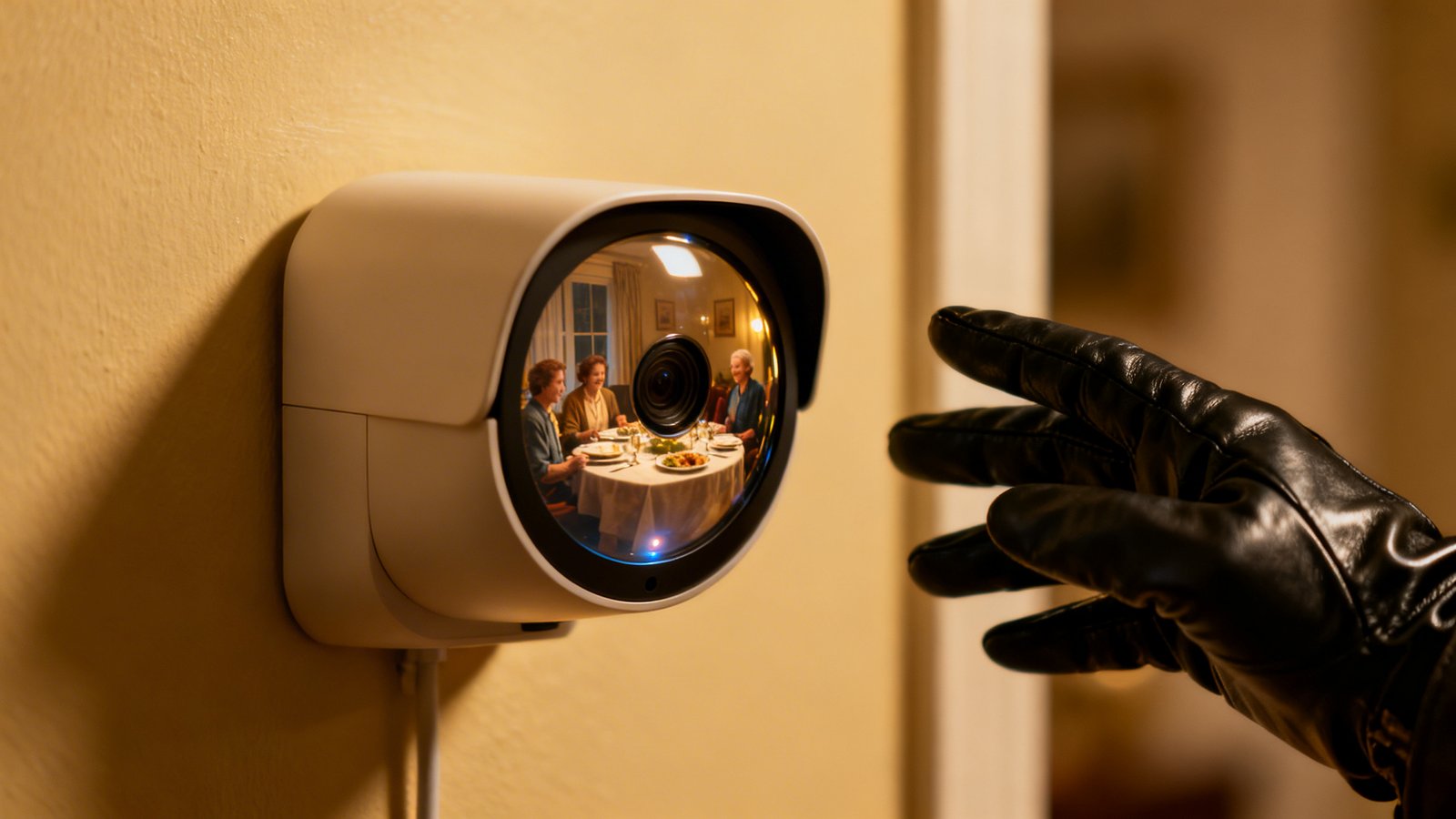
So, You Thought Your Nest Cam Was Just For You, Huh?
Let’s talk about Nancy Guthrie for a second. Poor Nancy. From what I can tell, her name’s been dragged into this whole mess, and frankly, it’s a mess that should make every single one of us with a “smart” home device sit up and pay attention. Because the big news, the shocker that’s probably making some tech execs sweat through their expensive polos right now, is that investigators “wrangled video” from her Google Nest camera. And not just any video. Video from the “backend systems.”
Backend systems. Let that phrase really sink in. It’s not like they just asked nicely and Nancy handed over an SD card. No, no, no. This implies a whole other level of data retention, of access, that most of us, if we’re being honest, probably didn’t even consider. You buy a Nest cam, right? You set it up, you get the alerts on your phone, you feel all secure and modern. You probably think, “Oh, it records to the cloud, I can check it whenever.” And then maybe, if you’re like most people, you assume that if you delete a clip, or if enough time passes, it’s just… gone. Poof. Vanished into the digital ether.
But here’s the thing. That digital ether? It’s actually a giant warehouse full of servers. Google’s servers, in this case. And those servers? They’re keeping a lot more than you think. This wasn’t some simple recovery of accidentally deleted files on your laptop. This was a deliberate extraction from what Google probably considers its own deep storage. And that, my friends, is a fundamental betrayal of trust, if you ask me. I mean, we’re told these devices are for our security, for our convenience. Not for giving law enforcement an all-access pass to our private lives without us even knowing the full extent of what’s being held onto.
The ‘Cloud’ Isn’t Just a Fluffy White Thing
We’ve been fed this narrative for years now about the “cloud.” It’s so airy, so ephemeral, so… not-there. Like your data just floats up into the sky and hangs out with the fluffy white stuff. But that’s a load of bunk, isn’t it? The cloud is physical. It’s racks and racks of blinking lights, humming machines, and hard drives. Tons and tons of hard drives. And on those hard drives? Your data. All of it.
Think about it. Every single moment your Nest cam was recording, every motion detected, every package delivery, every squirrel running across your lawn. It’s all streamed up to Google’s servers. They have to store it somewhere, right? For you to access it, for their algorithms to process it, for their “helpful” features. And apparently, for the cops to come knocking later. This isn’t just about a few days of recording. This could be weeks, months, even years of footage just sitting there, waiting to be “wrangled.” It’s unsettling. Really unsettling.
Privacy? What Privacy, You Ask?
Look, I’m not some anti-cop zealot here. I get that investigators need tools to solve crimes. Nobody wants criminals running around free. But where do we draw the line? When does “investigative tool” become “warrantless surveillance by proxy”? Because that’s what this feels like, doesn’t it? It feels like we’re willingly installing government surveillance devices in our homes, all for the low, low price of a few hundred bucks and the promise of knowing when your Amazon package arrives.
And let’s be clear, this isn’t just about Google Nest. It’s Ring cameras (owned by Amazon, another tech giant that loves your data). It’s any smart device that’s constantly recording, constantly listening, constantly connected to some “backend system.” Your smart speakers? Your smart TVs? Your smart vacuum cleaner, for crying out loud? They’re all collecting data. They’re all sending it somewhere. And if one company’s “backend systems” can be accessed, you can bet your bottom dollar others can too.
“The greatest trick the devil ever pulled was convincing the world he didn’t exist.” – Charles Baudelaire. Or, in this case, “The greatest trick tech companies ever pulled was convincing us our data was private in the cloud.” – Me, probably.
This whole scenario just highlights the massive, gaping chasm between what tech companies tell us about our data and what actually happens with it. We click “agree” on those mile-long terms and conditions without reading them – who does, honestly? – and we just assume there are safeguards. We assume our digital trash gets taken out. But apparently, sometimes, the digital trash collector just dumps it in a back alley for someone else to pick through.
It’s Not Just Cops, Folks
And here’s the kicker, the part that really keeps me up at night: if law enforcement can get this data, what about everyone else? I mean, think about it. If there’s a vulnerability, if there’s a way to “wrangle” this video from Google’s backend, what’s to stop a hacker? What’s to stop some rogue employee? What’s to stop a foreign government, for that matter? We’re talking about incredibly sensitive, incredibly personal footage of people’s homes and lives.
This isn’t just a theoretical “what if.” Data breaches happen all the time. Companies get hacked. Insider threats are real. And the more data these companies collect and store, the bigger the target they become. So, not only are you potentially giving the police a backdoor into your home, you’re also potentially creating a massive treasure trove for anyone with the skills and malice to get their hands on it. Your living room footage, your kids playing, your private moments – all potentially exposed because of a device you bought for “security.” It’s a cruel irony, isn’t it?
What This Actually Means
Honestly, this whole thing feels like a punch to the gut for anyone who cares even a little bit about personal privacy. It means the “delete” button isn’t really a delete button. It means the control you think you have over your own data is largely an illusion. And it means that convenience, that easy “set it and forget it” mentality, comes with a much, much higher price tag than just the initial cost of the device.
So, what do you do? Well, you could throw all your smart devices out the window. That’s one option. Probably a bit extreme for most people, I get it. But at the very least, you need to understand the true cost. You need to be aware that when you install one of these cameras, you’re not just installing a security device for you. You’re potentially installing a surveillance device for anyone with the right legal paperwork, or the right hacking skills, to come asking.
My honest take? Be skeptical. Read those terms and conditions, even if they’re boring as sin. Ask hard questions about data retention. And maybe, just maybe, think twice about pointing that camera inside your house. Because if Nancy Guthrie’s story tells us anything, it’s that what happens in your home, captured by your smart device, might not actually stay in your home… not really. And that, to me, is just plain terrifying.