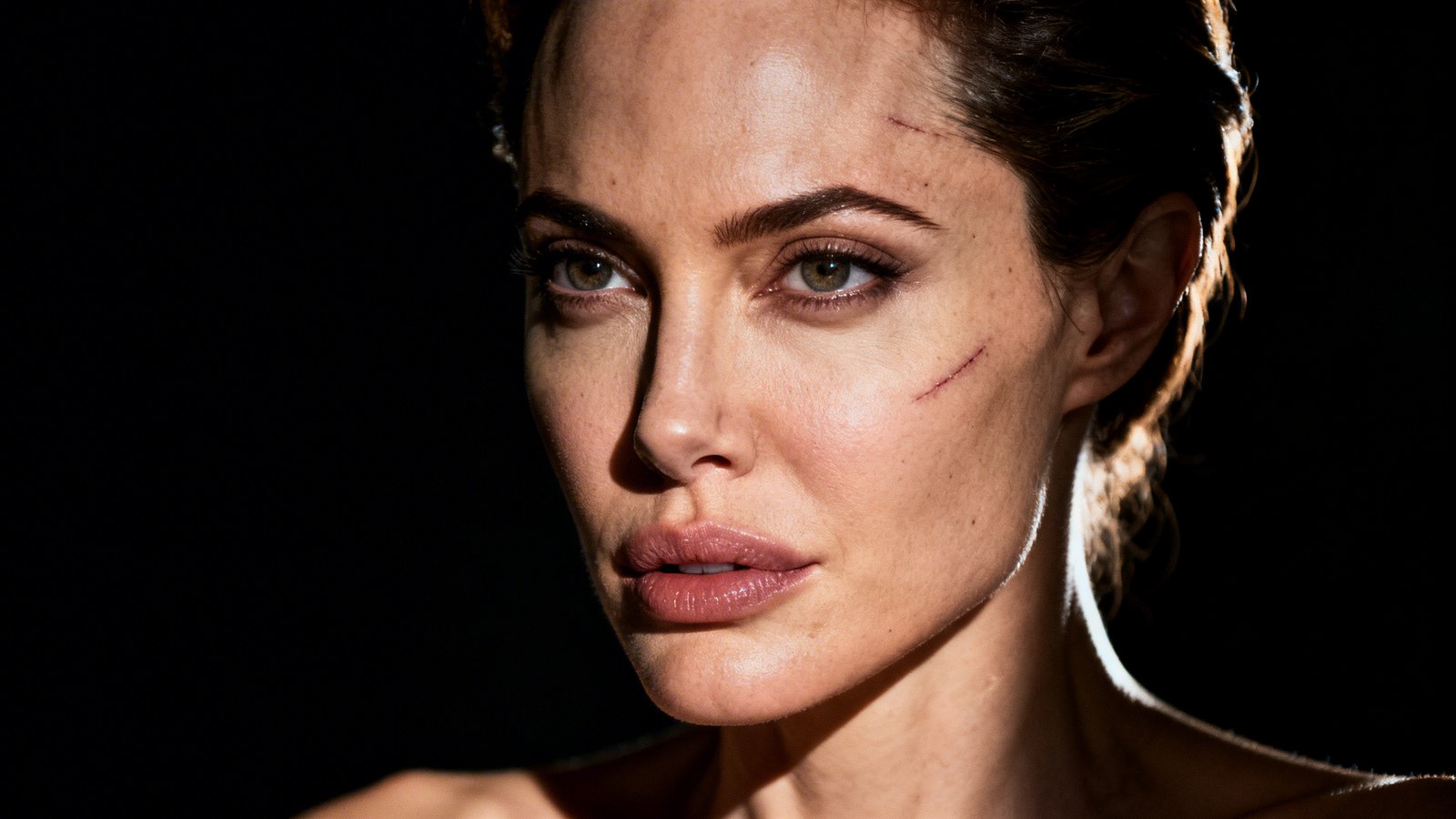
Okay, so listen, we’ve all been told, since we were kids, that scars are… bad, right? Something to hide. Something to fix. They’re the physical manifestations of boo-boos, accidents, or worse. They’re supposed to be a sign of damage, a permanent flaw on our perfect little canvases. But then Angelina Jolie, the Angelina Jolie, steps up and says she loves hers. Not just tolerates them, not just accepts them, but loves them. Like, what?
More Than Just a Cut – A Story Written on Skin
And look, this isn’t some shallow celebrity trying to be edgy. This is Jolie talking about the scars from her 2013 double mastectomy. We’re not talking about a little scraped knee here, folks. This was a massive, life-altering, body-changing decision she made after finding out she carried the BRCA1 gene. That’s the big one, the one that makes your risk of breast cancer jump through the roof. Her mother, Marcheline Bertrand, had died from ovarian cancer in 2007. So, for Jolie, this wasn’t hypothetical. This was real, raw, and deeply personal.
I mean, think about it. You get that news, you’ve seen what cancer can do to someone you love, and you make this choice. It’s not just a surgery; it’s a preemptive strike. It’s a battle you fight before the enemy even shows up. And then you’re left with the physical aftermath, those lines, those undeniable marks on your body where something once was. Society usually tells us to cover that up, to pretend it didn’t happen, to get reconstructive surgery so good that no one would ever know. Because, you know, we gotta maintain that illusion of perfection, especially for women.
The Weight of the Decision
The thing is, it wasn’t just about preventing cancer. It was also, I’d bet, about reclaiming some control. Her mother died, right? And she inherited this ticking time bomb. You can feel pretty damn powerless in that situation. So, to proactively say, “No, I’m taking this on. I’m making this choice for my future, for my kids,” that’s powerful. Really powerful. It’s a statement. And the scars? Those aren’t just remnants of the surgery; they’re battle honors, in a way. A physical testament to a decision made out of fierce love and self-preservation. That’s gotta change how you see yourself, you know?
But What Does “Loving Your Scars” Even Mean?
Here’s the kicker, though. When someone famous says something like this, it’s easy to dismiss it as, I don’t know, Hollywood-speak or just another PR move. But I actually think Jolie is tapping into something much deeper here. It’s not about liking the look of a scar, necessarily. Who cares about the aesthetic? It’s about what that scar represents. It’s a story. It’s a journey. And if you can embrace the story, the journey, then maybe, just maybe, you can embrace the physical reminder of it too.
“Our scars are not flaws, but maps of our lives. They show us where we’ve been, what we’ve survived, and the strength we found along the way.”
I’ve seen this pattern before, not just with Jolie. People who go through truly life-altering medical events – be it cancer, a severe accident, or a major illness – they often come out the other side with a completely different perspective on their bodies. What was once seen as a source of vanity or insecurity becomes something else. It becomes a vessel that carried them through hell. And those marks? Those are the proof. The proof they made it.
The Raw, Unfiltered Truth
Let’s be real, it takes a hell of a lot of courage to talk about your body, especially a body that’s been through something so intimate and intense, and say you love the parts that society often tells you to be ashamed of. Because for so many women, breast cancer or preventive mastectomies come with this extra layer of shame, of feeling “less than” or “unfeminine.” It’s a load of crap, obviously, but it’s a narrative that’s been drilled into us for generations.
Jolie’s statement kind of blows that whole idea out of the water. She’s not hiding. She’s not pretending. She’s saying, “These are mine. This is what I did. And I am stronger for it.” That’s a radical act, really, in a world that constantly pushes us to airbrush, filter, and surgically enhance ourselves into oblivion. It’s a rejection of that whole “perfect body” myth, especially post-trauma.
What This Actually Means
So, what does this all boil down to? I think it means that sometimes, the things we think are our biggest flaws, our biggest battle wounds, can actually become our greatest sources of power. Not because they’re beautiful in the conventional sense – although, hey, to each their own – but because of the story they tell. They tell a story of survival, of choice, of facing down fear and making it through. And that, my friends, is something worth celebrating, not hiding.
It’s not about encouraging everyone to get scars, obviously. It’s about looking at the ones you already have, whatever they are – physical, emotional, spiritual – and maybe, just maybe, reframing them. Seeing them not as imperfections, but as proof that you lived. That you fought. That you’re still here. And that’s a pretty damn powerful secret to unlock, isn’t it?