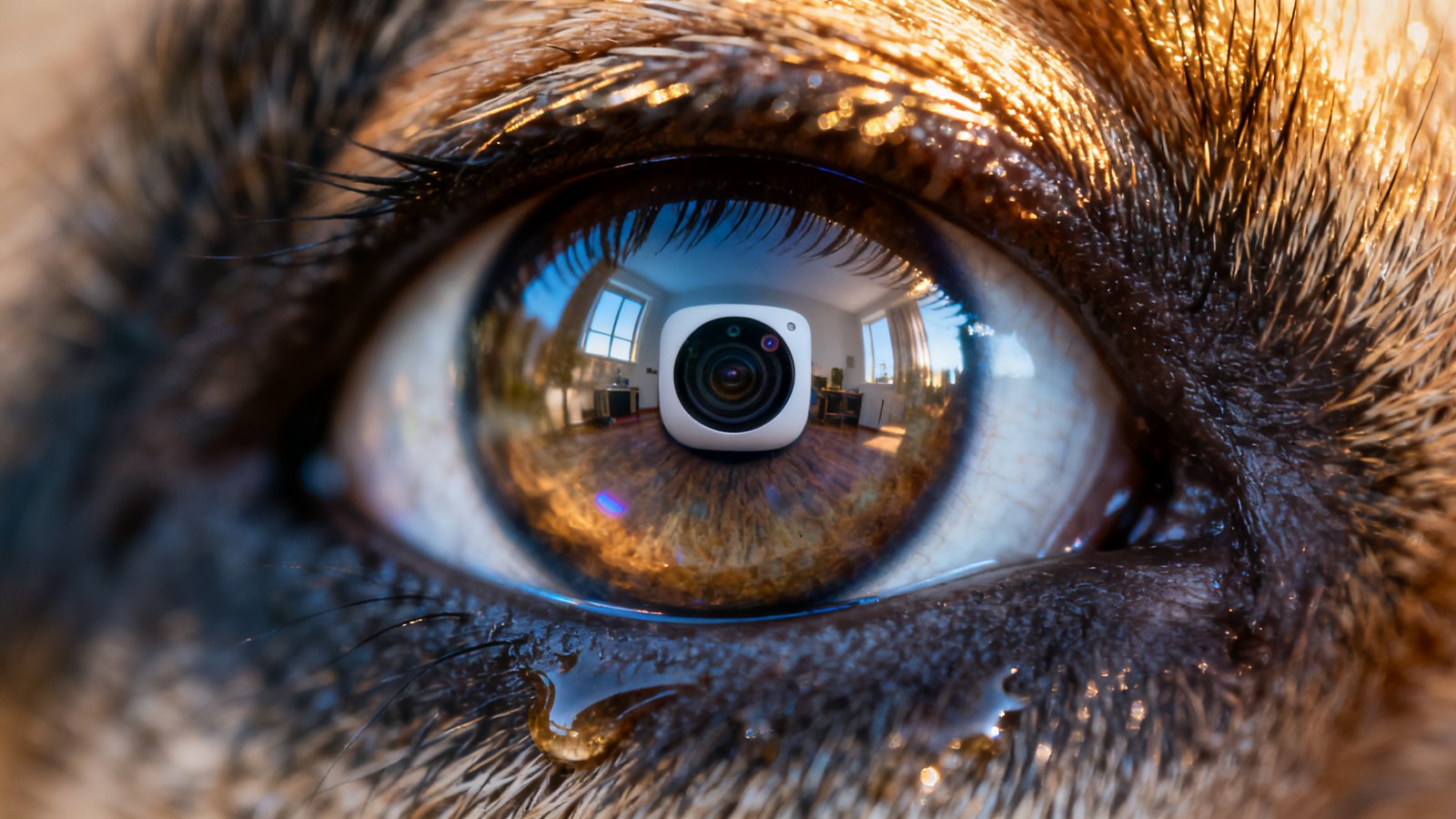
Okay, so Ring, right? Amazon’s little home security darling. They just dropped this Super Bowl ad, and honestly, if you didn’t blink, you might’ve missed the real gut punch hidden in all the cute animal antics. Because apparently, Ring is gonna start turning on all your cameras – and yeah, I mean all your cameras – to track your pets. Pet tracking. Cute, right? Until you peel back that fluffy layer and realize what it actually means. Every single camera you own, potentially watching, analyzing, and reporting on your furry little friend’s every move. But also, you know, your every move too. And the mailman’s. And your kid’s. It’s a lot, isn’t it?
“Oh, It’s Just For Your Precious Fido!” Yeah, Right.
Here’s the thing. Ring announced this “Pet Tracking” feature, all wrapped up in a nice, shiny, “don’t worry, it’s for your beloved animals!” bow. And look, I get it. We love our pets. My dog, bless her heart, is basically a furry little dictator in my house. If there was a tech solution that promised to tell me she wasn’t secretly opening the fridge for a midnight snack, I’d probably, maybe, consider it. But then my brain kicks in, the journalist brain that’s seen this pattern play out a hundred times before, and I’m like, “Hold on a minute, Ring.”
The company’s official line, as you’d expect, is that this is an opt-in feature. You have to actively turn it on. They say it uses “AI-powered detection” to identify pets in your camera’s view. Sounds innocuous enough. But let’s be real. We’re talking about Amazon here. The company that basically wants to be inside every aspect of your life, from what you buy to what you watch to, now, whether your cat is on the kitchen counter again. They’ve got a track record, a long track record, of expanding what their devices can do, often pushing the boundaries of what folks are comfortable with, and then kinda apologizing later. If they even apologize.
And “opt-in” today can easily become “default” tomorrow, or “highly recommended” with a bunch of pop-ups you just click through because you’re busy and just want to dismiss the darn notification. It’s a slippery slope, people. It really is. Remember when your smart TV was just a TV? Now it’s watching what you watch, selling that data, and probably listening in on your conversations for good measure. This feels like the same play, just with a cute puppy filter slapped on it.
The Real “Detection” Goes Beyond Rover
So, this “AI-powered detection,” what does that actually mean? It means your camera isn’t just recording; it’s actively analyzing. It’s processing images, identifying objects, and in this case, specifically identifying animals. But to identify an animal, it first has to identify everything else that isn’t an animal. Or even everything that is an animal, including humans. This isn’t just a motion sensor. This is object recognition. This is facial recognition, essentially, for pets. And if it can do it for pets, it can do it for people. And it does. We know it does.
It’s not a huge leap to go from “that’s a dog” to “that’s a human” to “that’s this specific human” or “that human is carrying that specific object.” And Amazon, with all its data lakes and machine learning prowess, is perfectly positioned to make those leaps. They’re basically building a real-time, always-on surveillance grid, and they’re asking us to pay them for the privilege of installing the sensors. It’s brilliant, if you’re a mega-corporation. Absolutely terrifying, if you’re a person who values, you know, privacy.
But Wait, Doesn’t That Seem Just a Little Bit Creepy?
I mean, come on. We’ve been having this conversation for years now. Every time a new smart device comes out, every time some company pushes the envelope a little further, it’s the same song and dance. “It’s for convenience!” “It’s for security!” “It’s for your pets!” And yeah, sometimes it is. Sometimes these things are genuinely helpful. But at what cost? At what point do we just shrug and say, “Well, I guess I’m living in a panopticon now, might as well enjoy the pet tracking”?
It reminds me of those “smart” cities that popped up, with cameras everywhere, all linked up, all feeding data into central hubs. The promise was safety, efficiency, a better urban experience. The reality was often just more surveillance, less anonymity, and a whole lot of questions about who gets to see that data and what they do with it. Ring’s pet tracking is just that, but scaled down to your living room. Or your backyard. Or your front porch. And if you have multiple Ring cameras, which many people do, then you’ve basically got a network already in place.
“We’re basically trading away fundamental freedoms for the dubious pleasure of knowing if Fluffy is napping on the couch.”
The Slippery Slope to Total Home Surveillance
Let’s be blunt. This isn’t just about finding out if your dog chewed the sofa. This is about normalizing constant, AI-driven surveillance within our most private spaces. And once it’s normalized, it’s really hard to walk back. Think about it: Ring has already had issues with law enforcement access to footage. They’ve partnered with police departments, sometimes handing over footage without warrants, or making it incredibly easy for police to request it. Now, imagine all that data, but with sophisticated object recognition, pet tracking, people tracking. It just builds and builds.
The privacy policy for these things? Usually a novel-length document written in legalese that nobody reads. We just click “I Agree” because we want the thing to work. And the companies know this. They bank on it. They know we’re tired, busy, and often just want the convenience without thinking too hard about the implications. But the implications are there, lurking in the fine print, and in the capabilities of the technology itself. This isn’t just a pet feature; it’s another piece in a much larger puzzle of ubiquitous surveillance.
And let’s not forget the security aspect. Every device connected to your network is a potential vulnerability. More complex features mean more code, more potential bugs, more ways for bad actors to get in. If your Ring camera can identify your pet, what else can it identify? And who else can access that information if there’s a breach? It’s not just hypothetical anymore; it’s a constant threat.
What This Actually Means
Look, I’m not telling you to smash your Ring doorbell with a hammer (though sometimes the thought crosses my mind). But I am saying, be smart. Be aware. Understand what you’re actually signing up for. This pet tracking thing, it sounds cute, it sounds helpful, it’s presented as a perk. But it’s also a significant step toward making your home a fully surveilled environment, where every movement, every object, every being is potentially cataloged and analyzed by a giant corporation.
For me, personally? My pet tracking system is my own two eyes, and maybe a little camera that only turns on when I specifically tell it to, not one that’s constantly running AI algorithms in the background. We need to push back, or at least be incredibly skeptical, when companies try to push these things on us under the guise of convenience or cute animals. Because the cute animals aren’t the ones losing their privacy. We are. And once it’s gone… well, good luck getting it back.