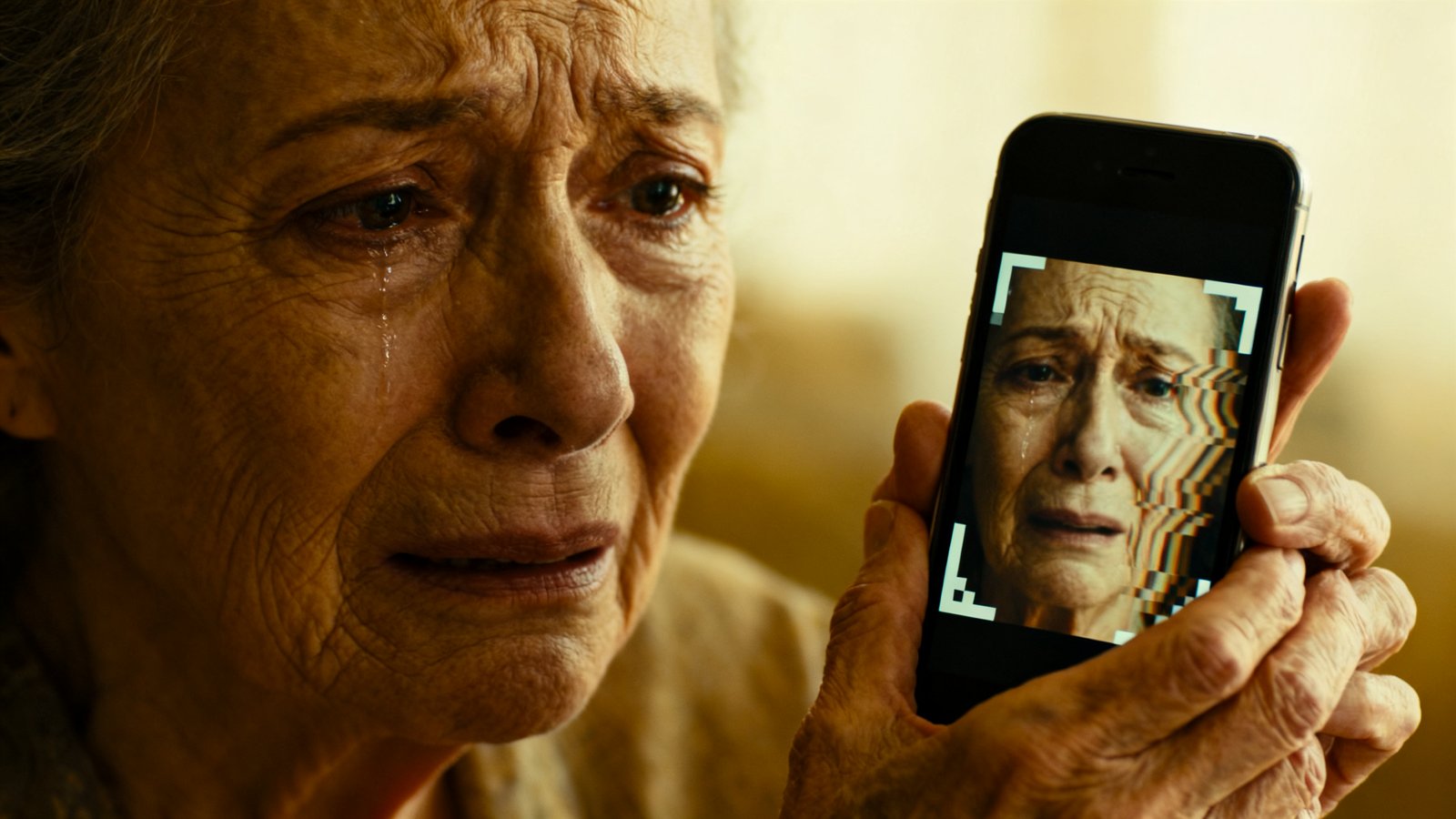
So, They Cloned Her Doctor’s Voice? Seriously?
Look, I’ve been writing about scams for fifteen years, and every time I think I’ve seen it all, something new and utterly horrifying pops up. This one? This is a new level of messed up. We’re talking about a woman who got a phone call from what sounded exactly like her doctor. The voice, the cadence, everything. But it wasn’t her doctor. It was a machine. A deepfake.
This fake doctor told her she was in some kind of legal trouble, probably had her convinced she was going to jail or something equally terrifying. And then, because these things always have a kicker, instructed her to transfer her life savings to a “safe” account. Which, of course, was anything but safe. Two hundred grand. Gone. Just like that.
I mean, can you even imagine? You’re 82 years old. You’ve worked your whole life, saved up, probably dreaming of grandkids and quiet afternoons. Then your doctor calls, and you trust your doctor, right? Of course, you do. That’s the whole point. And then you empty your bank account because a computer program pretended to be a human you trusted. It’s chilling, honestly. It’s not just about the money, it’s about the absolute violation of trust.
The Tech Is Moving Too Fast, Folks
The thing is, deepfake technology isn’t some far-off sci-fi nightmare anymore. It’s here. It’s accessible. And it’s getting better, way better, way faster than anyone seems to be able to keep up with. A few years ago, we were worried about deepfake videos of politicians saying silly things. Now, it’s weaponized against vulnerable people, used to steal their entire life savings.
We’re talking about AI that can clone a voice from just a few seconds of audio. Think about how many times you’ve posted a video online, or even just had a quick call with customer service. Your voice data is out there. Someone, or some thing, can grab it, replicate it, and use it to trick your grandma. Or you. Who’s to say?
Are We Just Walking Targets Now?
This isn’t just a sad story about one poor gran, as tragic as it is. This is a flashing, screaming red light for all of us. Because if AI can perfectly mimic a doctor, who’s next? Your bank? Your kids? Your spouse? The scary part is, we’re all so reliant on digital communication now. Texts, calls, video chats. How do you verify authenticity when the fakes are indistinguishable from the real thing?
“It’s like a digital ghost in the machine, and it’s coming for your wallet. You can’t see it, but you’ll definitely feel it.” – (Yeah, I just made that up, but it feels right, doesn’t it?)
I’ve seen this pattern before. Every new technology brings new ways for bad actors to exploit it. The internet was a Wild West for viruses. Email brought phishing. Social media brought identity theft. And now, AI deepfakes? This feels like the grand finale, the boss level of digital deception. Because it strikes at the very core of how we perceive reality and trust.
What This Actually Means
Honestly? We’re not ready. Not even close. Our banks aren’t ready. Our elderly aren’t ready. Hell, I’m not ready. We’re in a new era where you can’t even trust your ears, let alone your eyes, when it comes to digital interactions.
So what do you do? I don’t have all the answers, but here’s what I’m thinking, and what you probably should be thinking too:
Be paranoid. Seriously. If anyone, and I mean anyone, calls you or a loved one asking for money, or to transfer money, or for any kind of financial information, assume it’s a scam. Always.
Verify, verify, verify. Hang up. Call back on a known, official number (not the one they gave you). If your “doctor” calls, call their clinic directly. If your “bank” calls, call the number on the back of your card.
Talk to your family, especially older relatives. Explain deepfakes. Explain how convincing they are. Make sure they understand that even if a voice sounds exactly right, it might not be. This isn’t just about “stranger danger” anymore. It’s about “trusted voice danger.”
The banks need to step up. How is it that two hundred thousand dollars can just be transferred out of an 82-year-old’s account without a red flag going off somewhere? There needs to be better protection, better verification, better everything. This isn’t just user error anymore; it’s a systemic vulnerability.
This is big. Really big. This gran’s lost savings are just the beginning, I’m afraid. We’ve opened Pandora’s box with AI, and the scams are only going to get smarter, more insidious, and harder to detect. It’s not just your money that’s at stake, it’s your peace of mind. And frankly, that’s priceless.