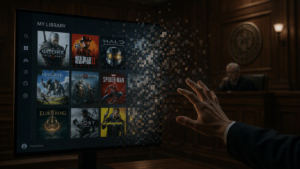
Alright, buckle up, because if you’re a content creator – and let’s be real, who isn’t trying to make something these days? – or even just a viewer who likes a good reaction video, things just got a whole lot messier. And by messy, I mean potentially lawsuit-y, DMCA-strike-y, revenue-gone-y messy. We’re talking about a court ruling that essentially says, “Hey, all you folks ripping clips for your reaction videos? Yeah, that could be a DMCA violation.”
The Hammer Drops on Fair Use (Kind Of)
Look, I’ve been around the block a few times, and copyright law has always been this weird, shifting beast. But this one feels like a particularly nasty jab. The news, bubbling up from a TorrentFreak report (and then all over Reddit, naturally), is that a court has ruled that merely ripping clips from copyrighted works – even if you’re going to use them in a transformative way later – can be a DMCA violation. Let that sink in for a second.
You know, the whole process? You get a video, you download it, you edit it into your reaction content. The act of acquiring it, the ripping itself, is now potentially the problem. Not necessarily the use in the final video, which is where Fair Use usually comes into play. This isn’t just about whether your final video is transformative enough to escape copyright infringement. This is about the very first step of getting that content.
And honestly? This drives me nuts. Because for years, we’ve had this ongoing, exhausting dance between content creators and copyright holders. Fair Use has been the shaky ground many reaction channels, commentary channels, and even educational channels have stood on. You take a piece, you add your own creative spin, your own commentary, your own context – you make it new. That’s the whole point, right? That’s what Fair Use is supposed to protect.
The Devil’s in the Details (and the DMCA)
The thing is, the DMCA – the Digital Millennium Copyright Act – it’s a beast of its own. It’s got these anti-circumvention provisions. Basically, if a work is protected by some kind of digital lock or access control (think DRM, or even just YouTube’s internal protections sometimes), then trying to get around that to copy it can be illegal. Even if you’re doing it for what you think are legitimate reasons. So, if you’re using software to “rip” a video from a platform that’s trying to protect it, you could be triggering this part of the DMCA.
And that’s where this ruling gets really spicy. It’s not about the outcome of your creative endeavor, it’s about the method you used to get the raw materials. It’s like saying, “You can bake a cake, sure, but if you snuck into the flour mill to get the flour, you’re still in trouble.” Even if the cake is a masterpiece. It’s a technicality, yeah, but a technicality with teeth. Big, pointy, expensive teeth.
So, Are Reaction Videos Dead? Maybe Not, But…
Look, are we going to see an immediate extinction event for every reaction channel on YouTube? Probably not. People are stubborn, and creators are incredibly resourceful. But this definitely throws a massive wrench into the works. It creates a new layer of risk, a new avenue for copyright holders to pursue creators they don’t like.
“It’s not about stifling bad content, it’s about controlling access to all content. And that’s a dangerous precedent for creativity.”
Think about it. Before, the fight was usually, “Is this video transformative enough? Is it fair use?” Now, before you even get to that argument, a copyright holder could just say, “You circumvented our protections to get that clip, DMCA violation, boom.” It’s a pre-emptive strike, basically. And for smaller creators, for the folks who don’t have a team of lawyers on retainer, this is terrifying. It’s a huge chilling effect, plain and simple. Who’s gonna risk getting hit with a DMCA claim just for downloading a video, even if their final product would be a stellar example of fair use?
The Real Play Here, If I’m Being Honest
This isn’t really about protecting art from piracy, not in the traditional sense. This feels like a power play. A way for big studios, big production companies, to control who gets to talk about their stuff, how they get to talk about it, and ultimately, who gets to make money off of it. They want to maintain tight control over their intellectual property, which, okay, I get that on a fundamental level. But when that control starts to choke out derivative works, commentary, criticism – things that actually add to the cultural conversation – then we have a problem.
It’s about gatekeeping, really. It’s about saying, “You can play in our sandbox, but only if we give you the shovel. And maybe the sand. And probably charge you for it.” And let’s be clear, many of these reaction videos, the good ones anyway, they actually promote the original content. They introduce new audiences to old movies, obscure music, forgotten TV shows. It’s free marketing, for crying out loud!
But no, instead we get this. Another legal hurdle. Another reason for creators to be scared. Another piece of the internet being chipped away from the open, collaborative spirit it once had. It’s just… exhausting. And it punishes the very people who often help keep cultural conversations alive.
What This Actually Means
So, what’s a creator to do? Well, for one, you’ve gotta be more careful than ever. Seriously. It’s not enough to just hope your final video is transformative. You now have to consider how you even got the source material. Does this mean more creators will just record their screens directly, avoiding “ripping” software? Maybe. But that’s a clunky workaround, and it still doesn’t guarantee you’re safe.
This could push creators towards official licensing, which is expensive and often out of reach for independent channels. Or, it could lead to a lot more original content that avoids copyrighted material altogether, which, hey, might not be a bad thing in some ways, but it also silences a huge segment of commentary and criticism that relies on showing the thing it’s commenting on.
I don’t have a neat answer here, folks. I wish I did. All I know is that this ruling makes an already complicated, fraught area of online creation even more treacherous. It’s a blow to fair use, a boost to corporate control, and a headache for anyone trying to make a living, or even just make some art, online. Be careful out there. Because the internet, it’s getting less wild west and more… walled garden, every single day. And that, my friends, is a damn shame.