
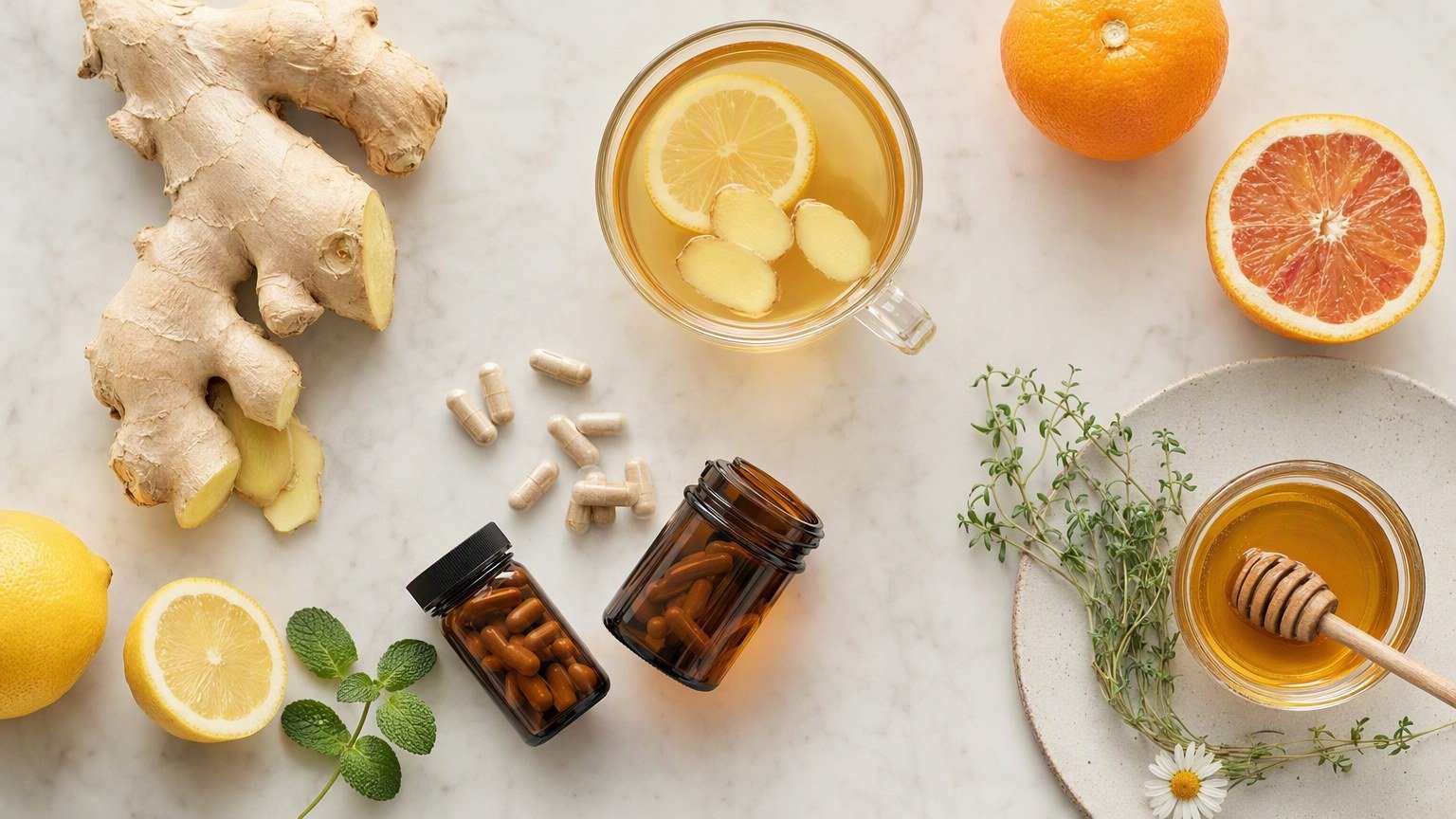
Every fall, the same thing happens. The air gets sharper, everyone schedules a little more, and suddenly the office feels like a petri dish with fluorescent lighting. One person coughs near the copier, and by Friday half the group chat is asking whether they should cancel their weekend plans.
Every fall, the same thing happens. The air gets sharper, everyone schedules a little more, and suddenly the office feels like a petri dish with fluorescent lighting. One person coughs near the copier, and by Friday half the group chat is asking whether they should cancel their weekend plans.
And while nobody has a magical shield against colds and flu, supporting your immune system doesn’t require a total personality change. It mostly comes down to a few basics, plus enough sleep and sanity to keep showing up.
Here’s the honest version: the best routine is the one you’ll actually follow. Not the one that requires you to alphabetize your supplements, drink eight glasses of mysterious green powder and become a new person by November.
Start With the Basics, Not the Weird Stuff
Yes, a daily multivitamin can fill some gaps. That doesn’t mean it’s a ticket to immunity forever, though. Think of it as a small piece of the puzzle, not the whole puzzle. If your diet is generally decent and you’re not dealing with a specific deficiency, a supplement isn’t going to do the heavy lifting on its own.
Food still matters. Protein, fruit, vegetables and whatever your particular version of “healthy” looks like can support everyday health. But here’s the catch: none of that works particularly well when you’re running on four hours of sleep and eating whatever is closest to the microwave at 9 p.m.

The routine that actually helps is usually less dramatic than the internet suggests. Get reasonably rested. Eat meals. Drink water. Move your body. Wash your hands when you’ve touched a public surface. Maybe don’t share the office fruit bowl after someone sneezed near it.
Not exactly thrilling, I know. Still, boring is underrated.
1. A Daily Multivitamin, If It Makes Sense for You
A multivitamin can be a convenient way to cover basic nutritional gaps, especially when your eating habits are more “whatever’s in the fridge” than carefully planned. But it’s not a substitute for real food, and more isn’t always better.
That matters because the supplement aisle can quickly turn into a competition for who has the most bottles in their basket. Zinc, vitamin C, vitamin D, herbal blends – people carry them around like they’re preparing for a minor apocalypse.
Before adding several products, check the labels, think about what you’re already taking and talk with a healthcare professional if you have a medical condition, take medication or are pregnant. And don’t assume a giant bottle means better protection. It mostly means more bottles under the sink.
What Does “Immune Support” Even Mean?
That phrase gets used everywhere, which is helpful if you’re trying to sell something and less helpful if you’re trying to understand what you’re buying. In plain English, immune support means giving your body the conditions it needs to respond normally to everyday germs and infections.
It doesn’t mean you’ll never get sick. It doesn’t mean you can stand on a bus next to someone with the flu and be fine. It also doesn’t turn a supplement into a replacement for vaccination, medical care or basic infection prevention.

The useful approach is less about hunting for a miracle and more about removing obvious weak spots. That’s where sleep becomes unfairly important. Your body doesn’t need to perform wellness theater at midnight after a 6 a.m. alarm.
“The best immune-support routine is usually the one you can keep doing on a busy Tuesday, not the one that looks impressive on social media.”
2. Consistency Beats Intensity
The wellness industry loves extremes: intense morning routines, 20-step skincare plans and cleanouts that begin Monday at 5:30 a.m. But consistency is what makes those things matter, and consistency is also much harder than buying a new product.
Take your multivitamin when you’ll remember it. Keep a water bottle where you can see it. Choose foods you actually enjoy. If you’re going to exercise, do something that doesn’t make you resent every stair afterward.
And don’t wait until you feel terrible to pay attention. The point of seasonal preparation isn’t to treat a cold that’s already settled in. It’s to make ordinary habits easier to maintain before your calendar turns into holiday chaos.
3. Make Room for Sleep and Recovery
I’m a little suspicious of any routine that promises better immunity while encouraging you to stay up scrolling. Sleep isn’t glamorous, but it’s one of the least ignorable parts of staying well.
That doesn’t mean you need a perfectly silent bedroom and a blackout curtain that costs more than your groceries. It does mean giving yourself a reasonable chance to recover, especially when work, school, travel and family obligations are all competing for the same hours. Sometimes the signs that something's wrong get dismissed as ordinary seasonal illness, like What Parents Ignored Until It Was Too Late.
The Five Essentials Worth Keeping Close
For a practical shopping list, start with these five categories:
- A balanced everyday diet, with fruits, vegetables, protein and foods you genuinely want to eat.
- A daily multivitamin, when appropriate for your needs and approved by a healthcare professional.
- Reliable sleep habits, because rest isn’t an optional add-on when you’re trying to support your body.
- Everyday hygiene basics, including handwashing and cleaning frequently touched surfaces when you’re sick.
- A little regular movement, because activity can support overall health without requiring you to turn it into a punishment.
That’s the unsatisfying secret. No single item carries the whole team. A multivitamin may help cover a gap, but it can’t compensate for every poor choice. And wellness products are supposed to fit into your life, not take it over.
What This Actually Means
As cold and flu season approaches, you’re likely to see plenty of promotions for immune-support products. Some of them may be useful additions. Some may simply be expensive packaging.
My advice? Spend your money and attention on the fundamentals first, then choose supplements carefully instead of buying everything at once. The Vitamin Shoppe can be a convenient place to compare everyday wellness options, but convenience isn’t the same as necessity.
And the real test won’t be whether your routine looks perfect on a glowing bathroom counter. It’s whether you’re still doing it in December, when the weather is bad, the schedule is full and the only thing on your list is “find sanitizer.”
Keep it simple. Keep it going. And maybe, for the love of everything, wash your hands before you go back to the office.